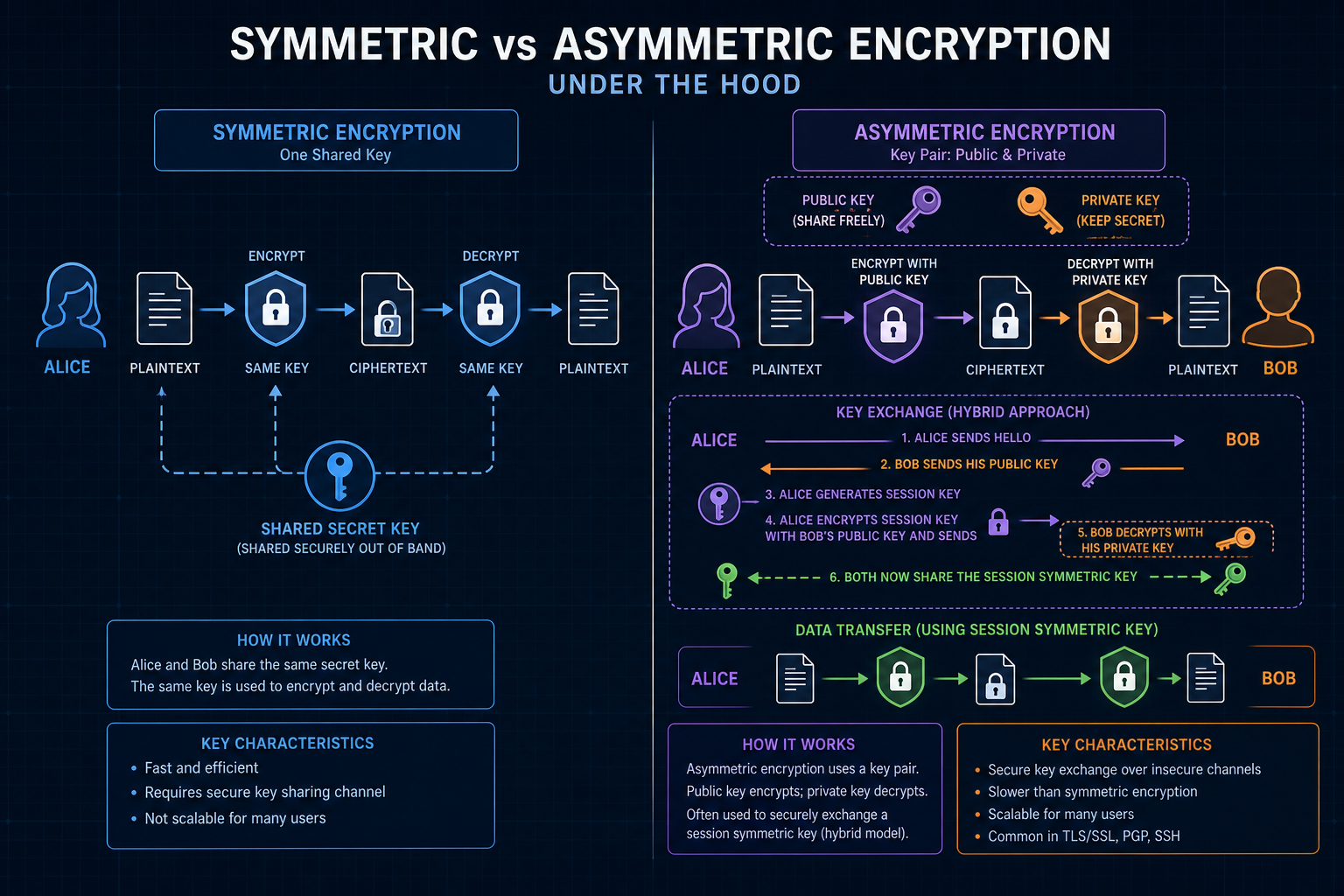
Symmetric vs Asymmetric Encryption - Under the Hood
Symmetric crypto shares one secret for speed. Asymmetric uses key pairs for trust and key exchange. Where each appears in TLS, APIs, data at rest, and which mistakes look like security.
Symmetric crypto shares one secret for speed. Asymmetric uses key pairs for trust and key exchange. Where each appears in TLS, APIs, data at rest, and which mistakes look like security.
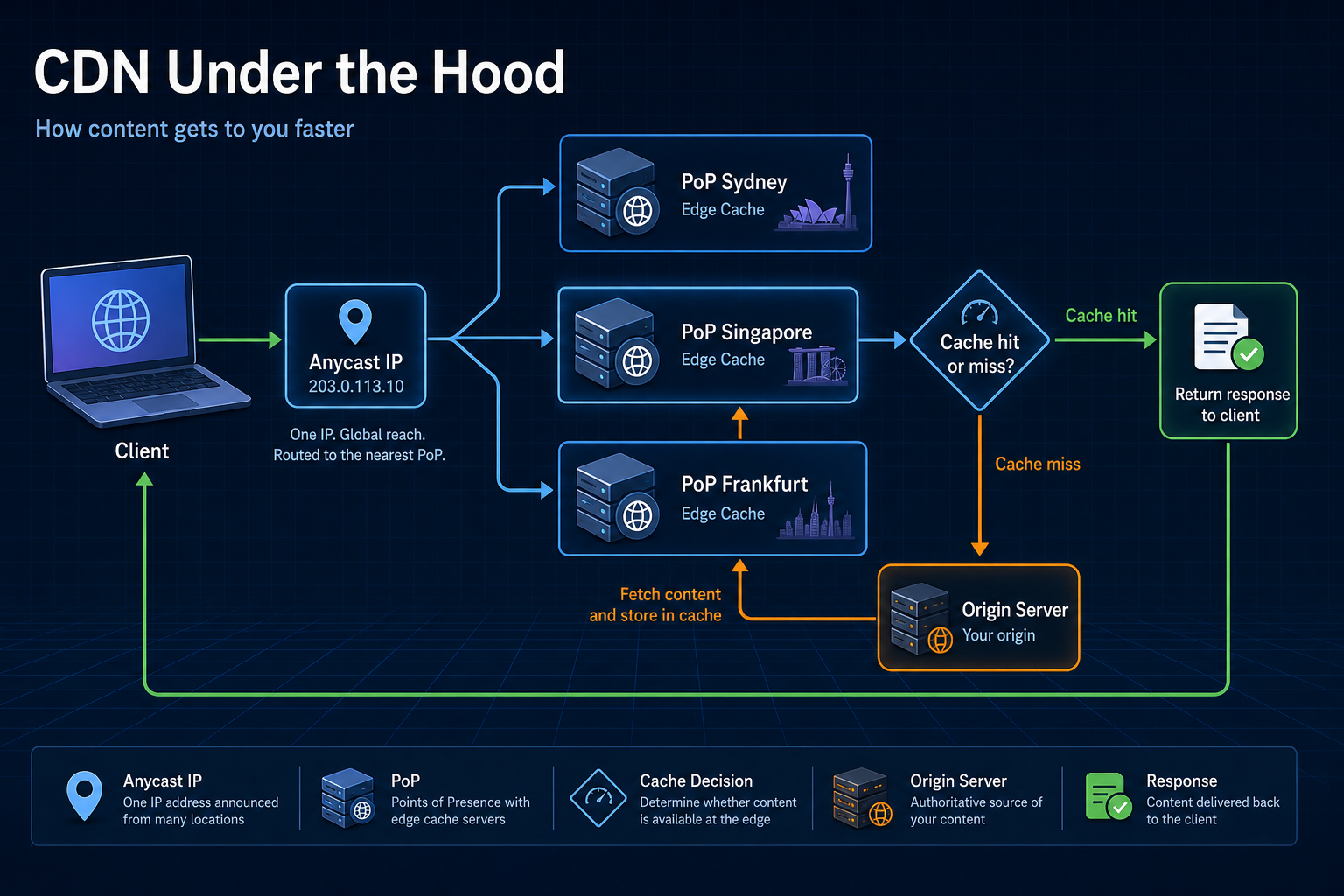
A CDN is a cache-and-route fabric at the edge: PoPs, origin, cache keys, TTL, anycast, and the hit/miss path. Why delivery scales, and which failures people mislabel as app or network.
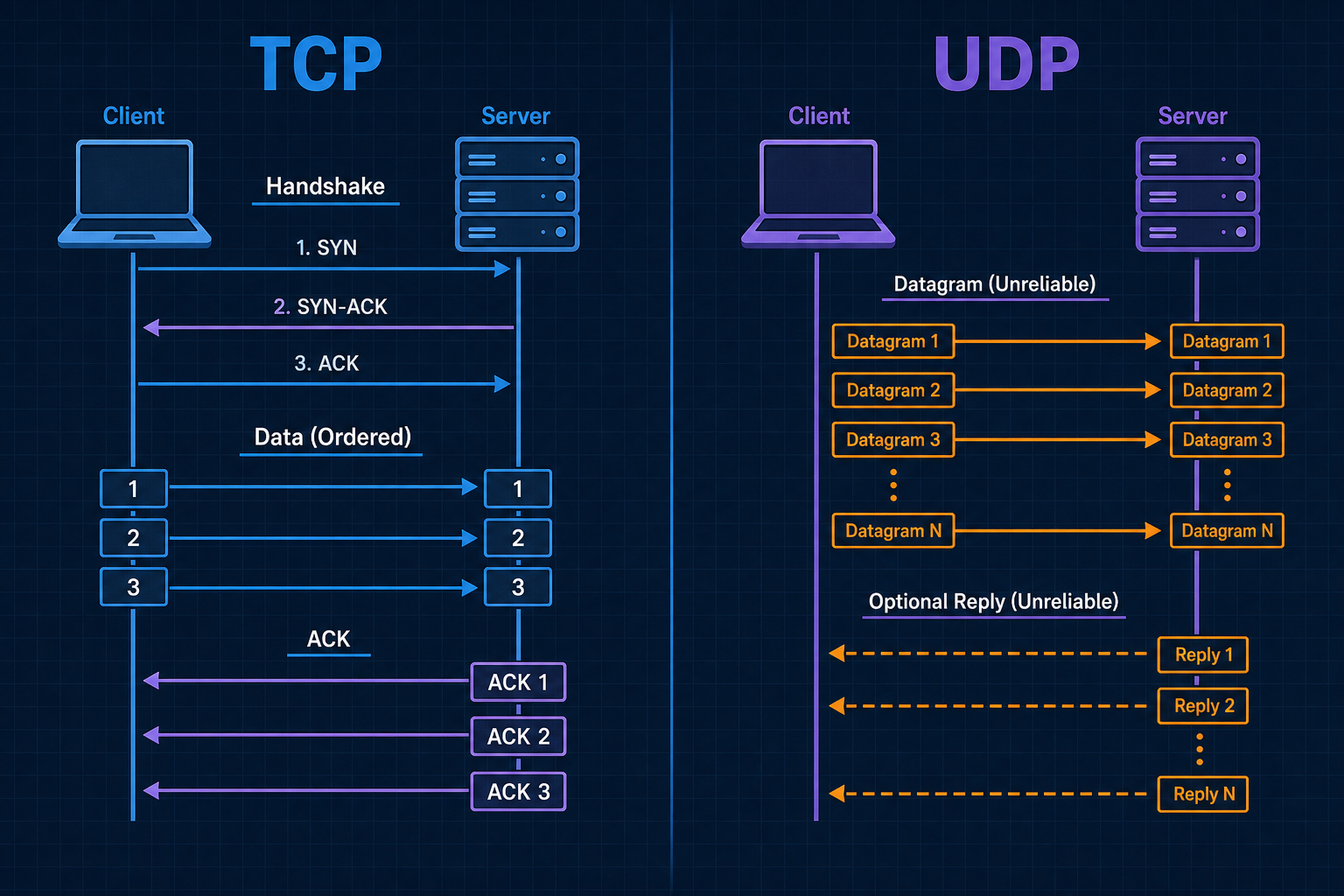
TCP is a reliable byte stream with handshake, ACKs, and congestion control. UDP is datagrams with no delivery guarantee. Components, steps, use cases, and which failures people mislabel as app bugs.
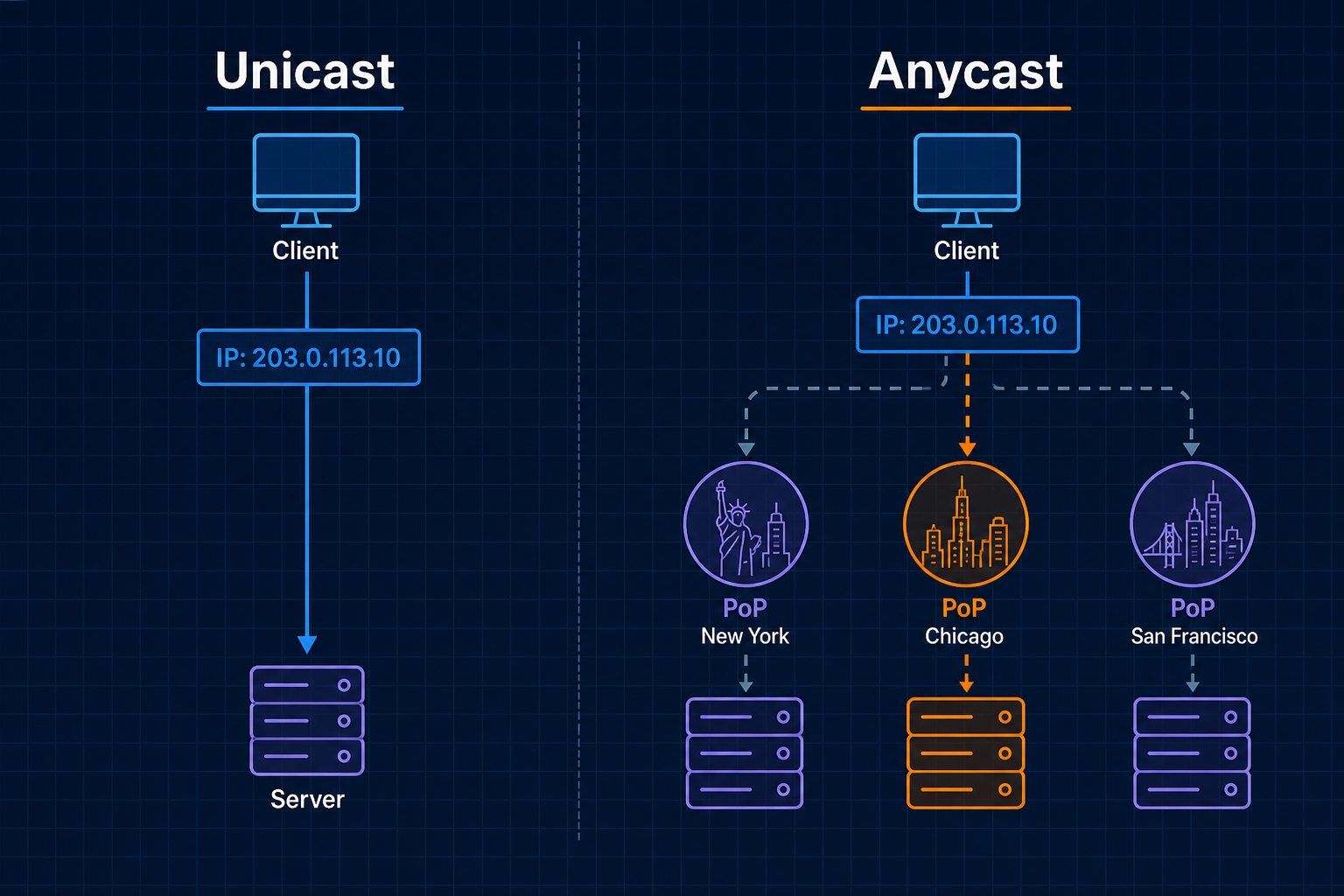
Unicast maps one IP to one place. Anycast maps one IP to many places and lets BGP pick the path. How both work, where DNS and CDNs use them, and which failures look like app bugs.
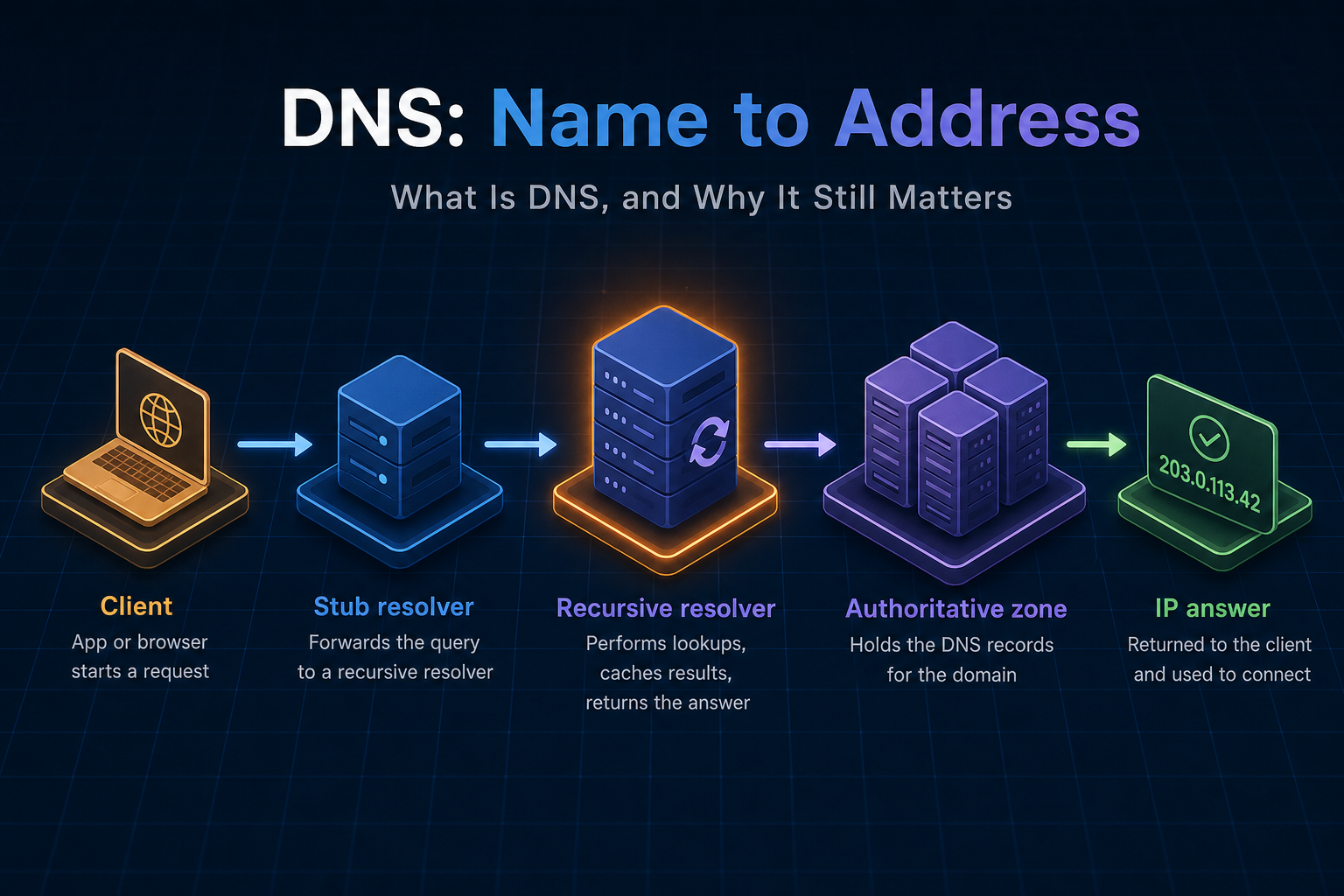
DNS is a globally distributed, hierarchical, eventually consistent naming database. Stub, recursive resolver, root, TLD, authoritative name server, caching, TTL, and anycast.
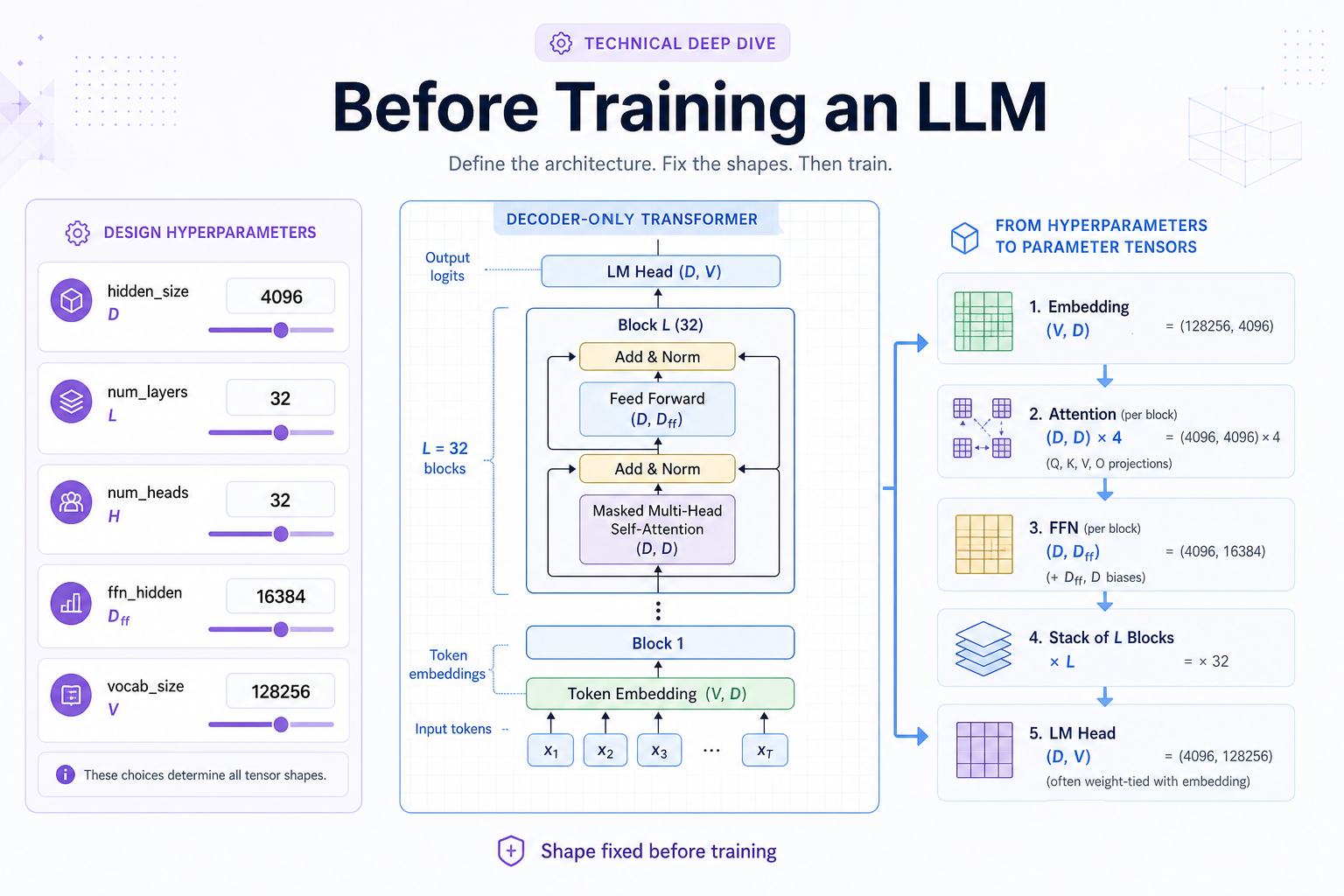
Hyperparameters, vocabulary, and why a 7B model is 7B before day one, how the dials connect, where parameters live, and why the context window is a budgeted choice.
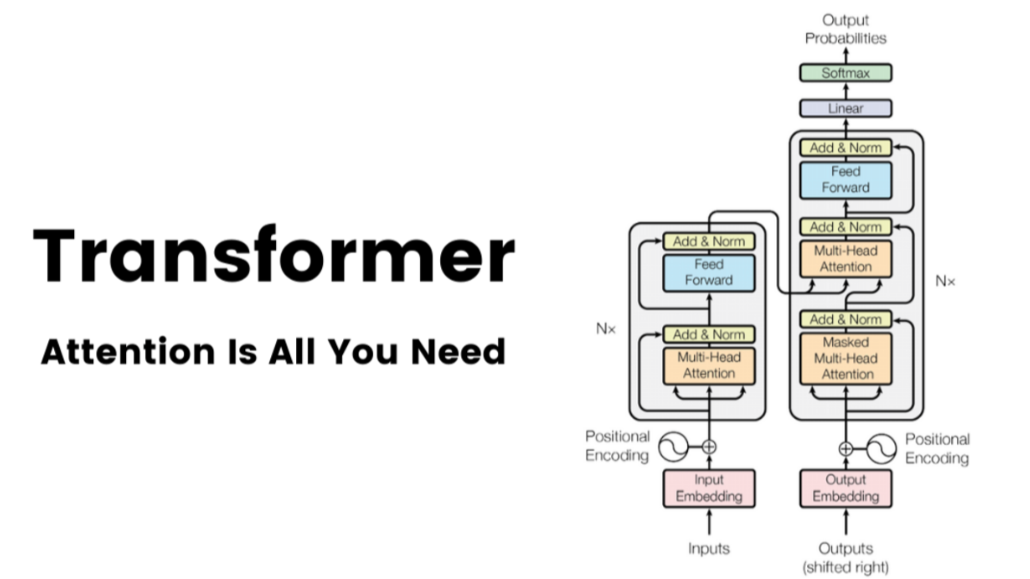
A 20,000-ft view of the LLM lifecycle and why understanding the four stages matters for enterprise architecture.