
Enterprise AI Workflow Patterns: Autonomy vs Control
Choose between single inference, fully autonomous agents, deterministic workflows, and guided hybrid agents. Comparison matrix, JSON contracts, and when to escalate from one call to a full agent.

Choose between single inference, fully autonomous agents, deterministic workflows, and guided hybrid agents. Comparison matrix, JSON contracts, and when to escalate from one call to a full agent.

Enterprise agent architecture: when a shared runtime with governed routes is enough, and when different execution boundaries require specialized agents.

User identity answers who is asking; agent identity answers which software is acting. Least privilege, audit, revoke, and dual gateway checks for real-time and batch.
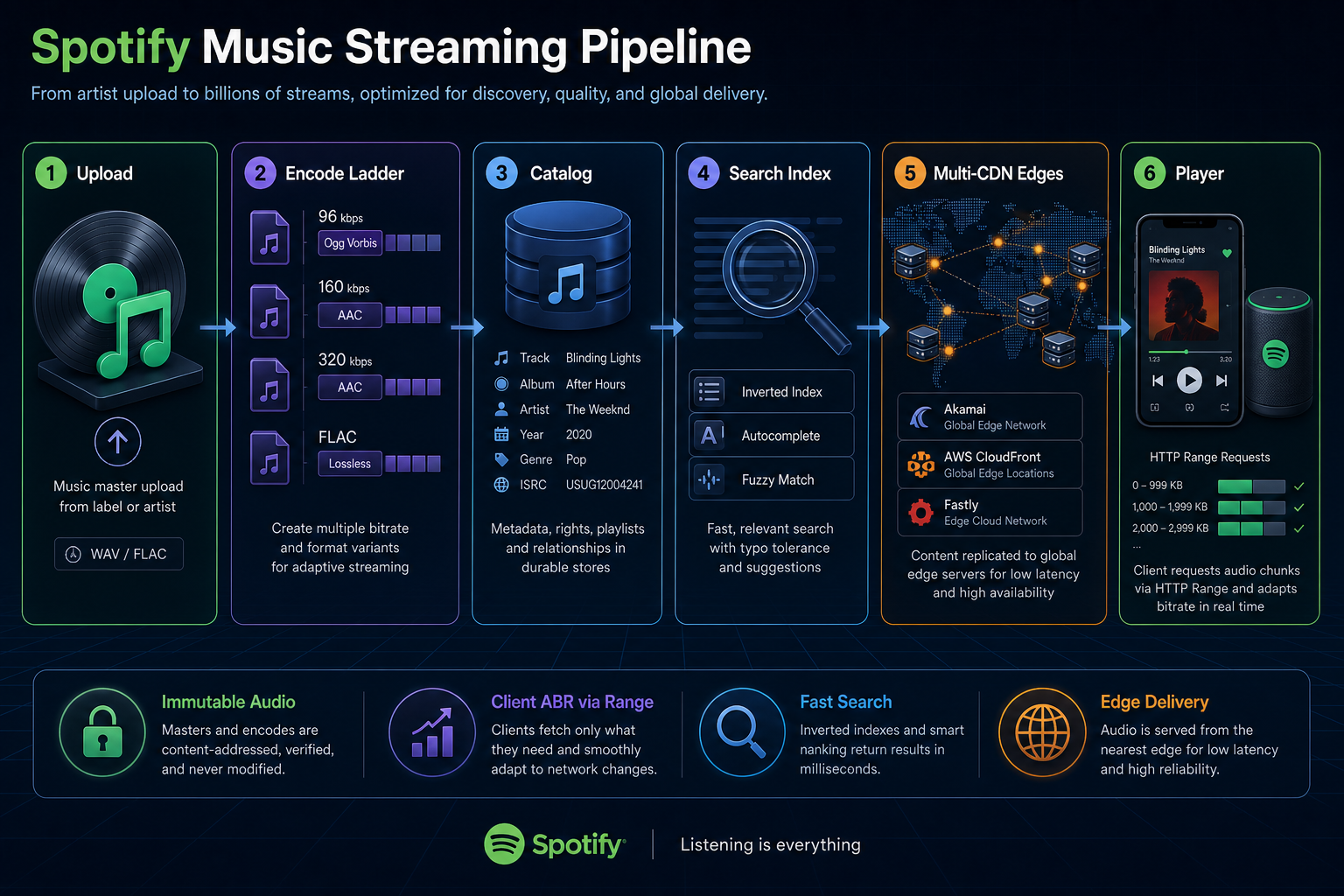
How a Spotify-class stack turns a master upload into searchable catalog and playable audio: ingest, multi-bitrate encode, search index, multi-CDN delivery, and client ABR over HTTP range requests.
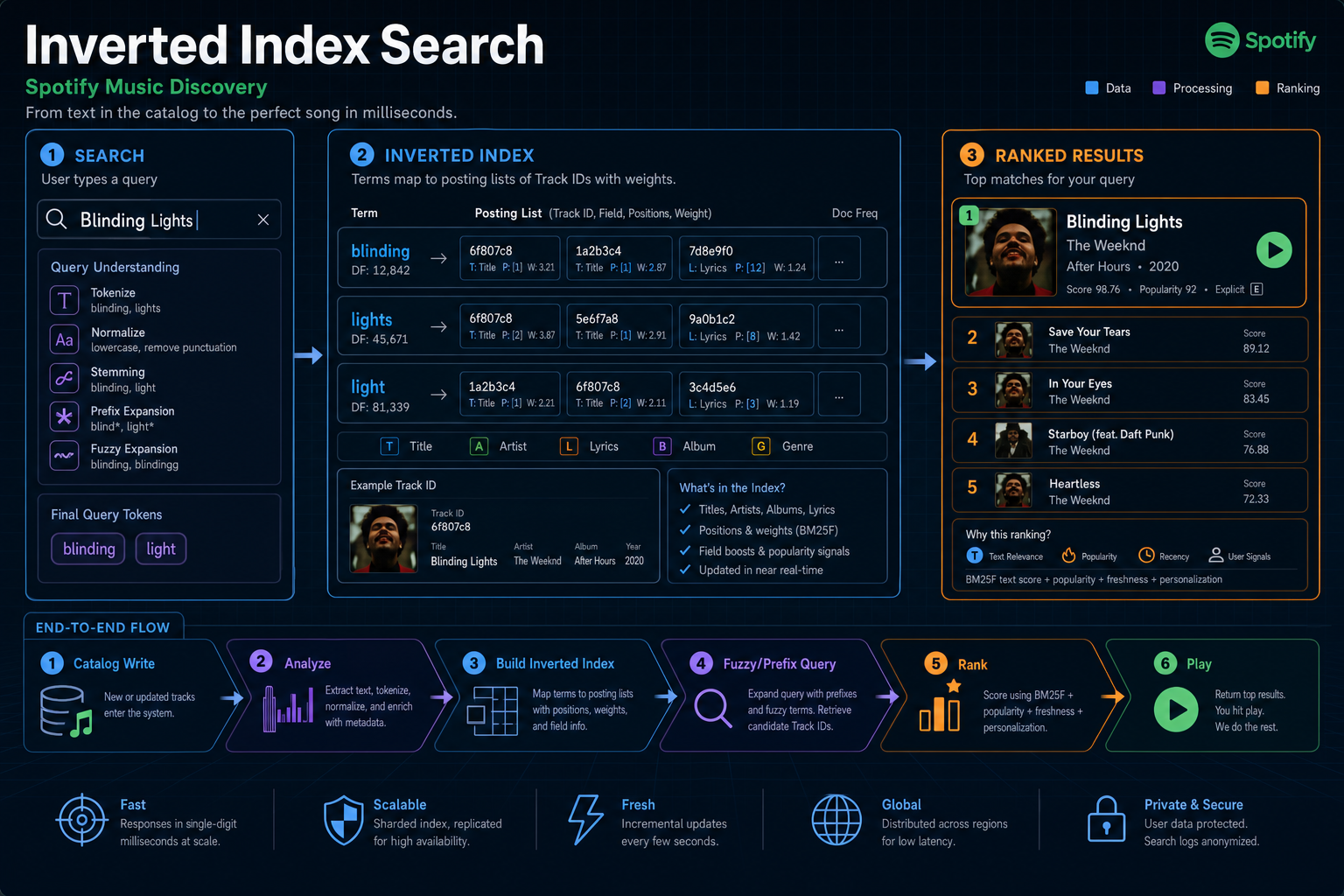
System design of inverted index search with a Spotify worked example: catalog vs index, title artist album lyrics postings, autocomplete, fuzzy match, ranking, and play hydration.
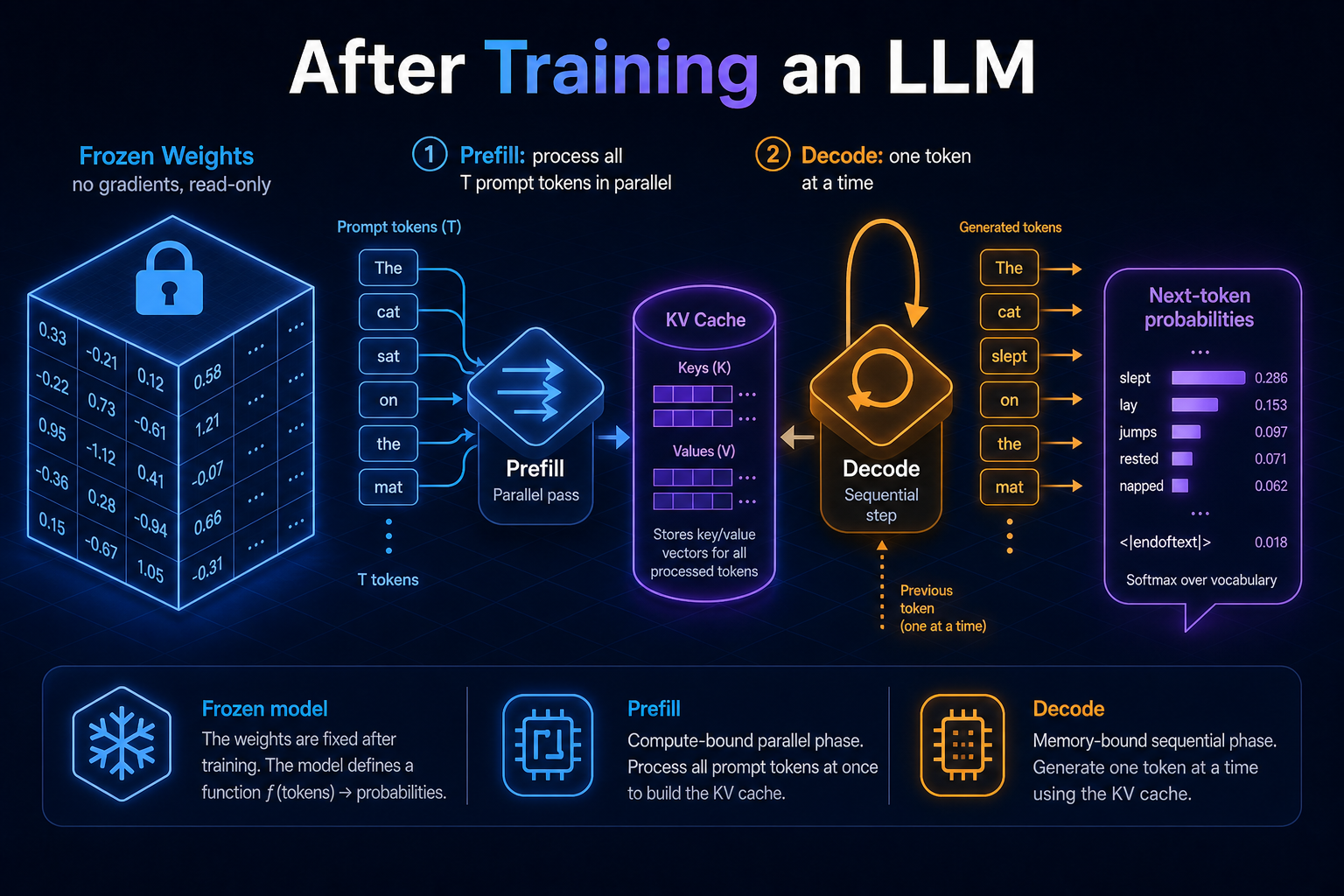
What happens once training stops: frozen weights, prefill vs decode, sampling, the KV cache, and the serving tricks that make inference faster without changing what the model knows.
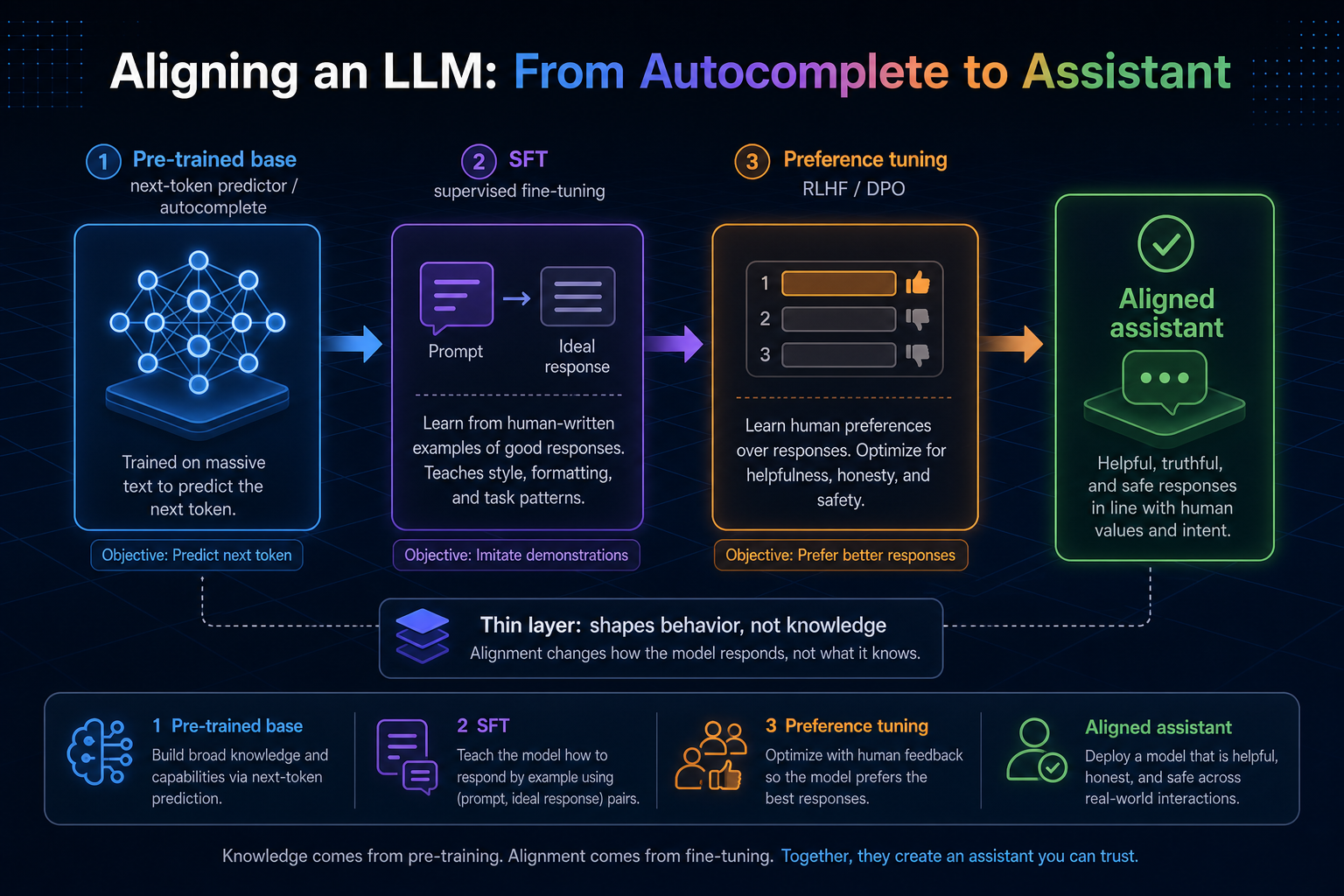
How SFT and preference tuning (RLHF/DPO) turn a pre-trained next-token model into a helpful assistant: same training loop, different data, thin layer that shapes behavior not knowledge.
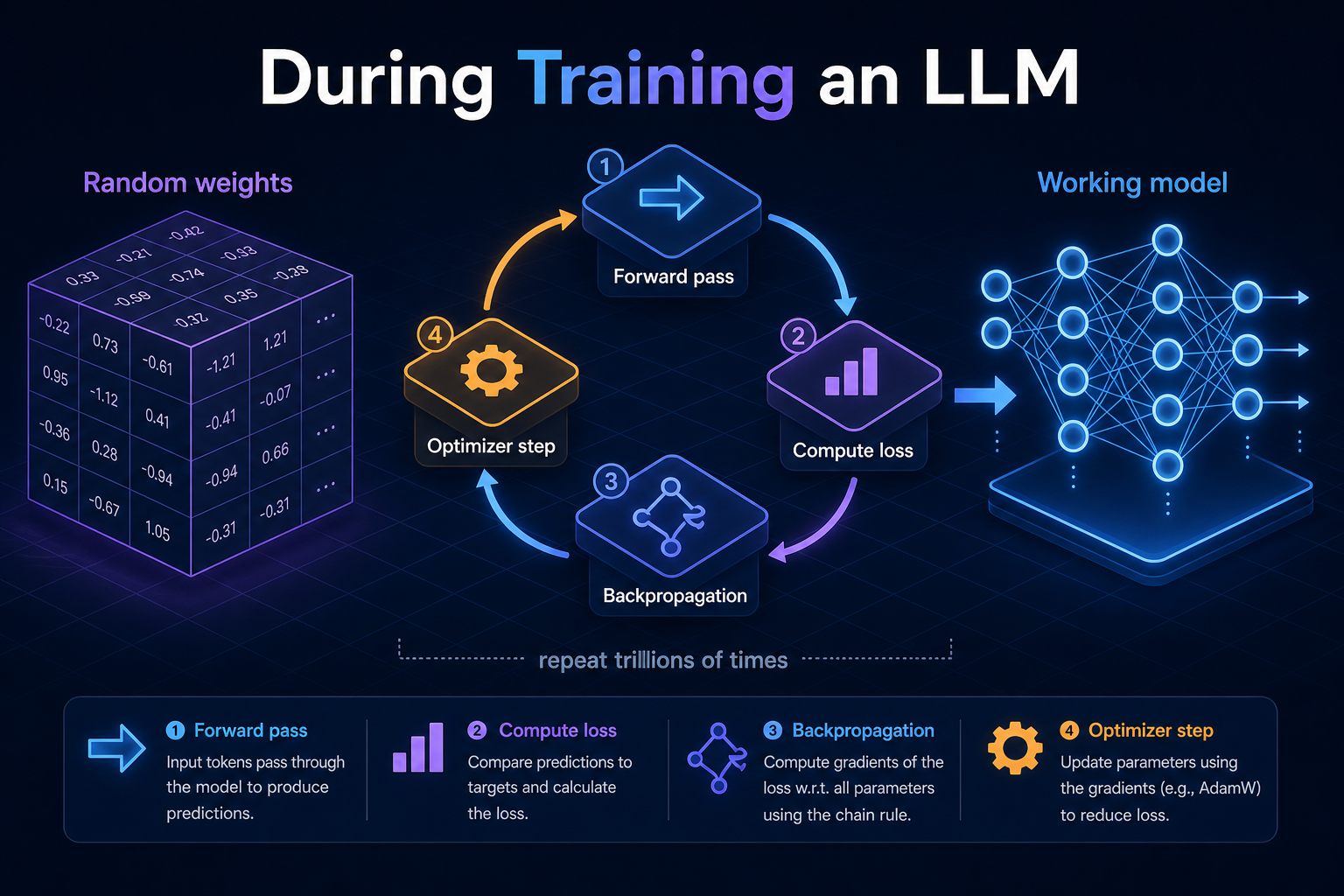
What happens inside the weight tensors as an LLM trains: random initialisation, the four-step training loop (forward, loss, backprop, optimizer), and what each component learns as a next-token model.
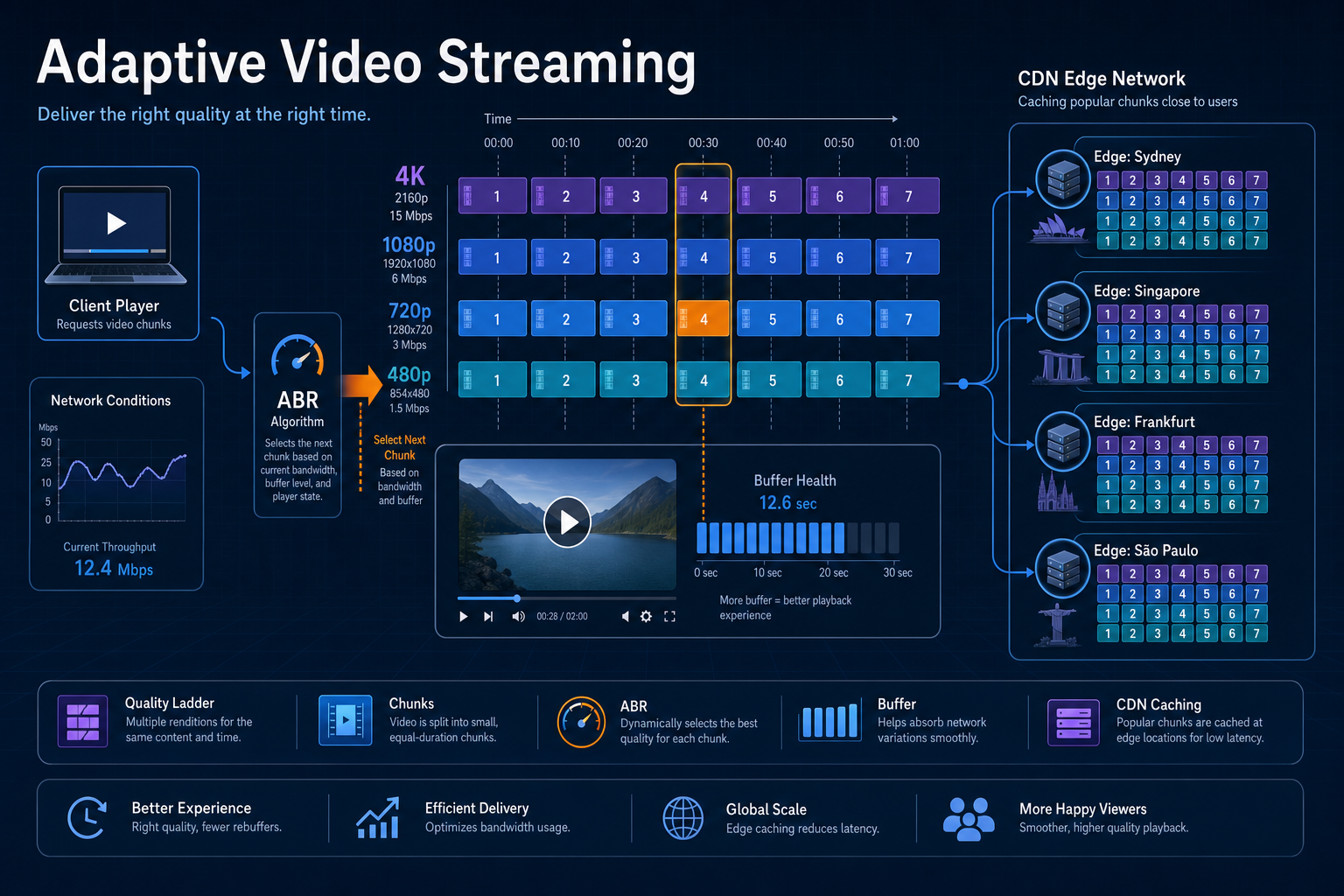
Netflix does not stream one file. Chunks, quality ladders, manifests, ABR decisions, buffering, seeking, and CDN caching, one segment at a time.
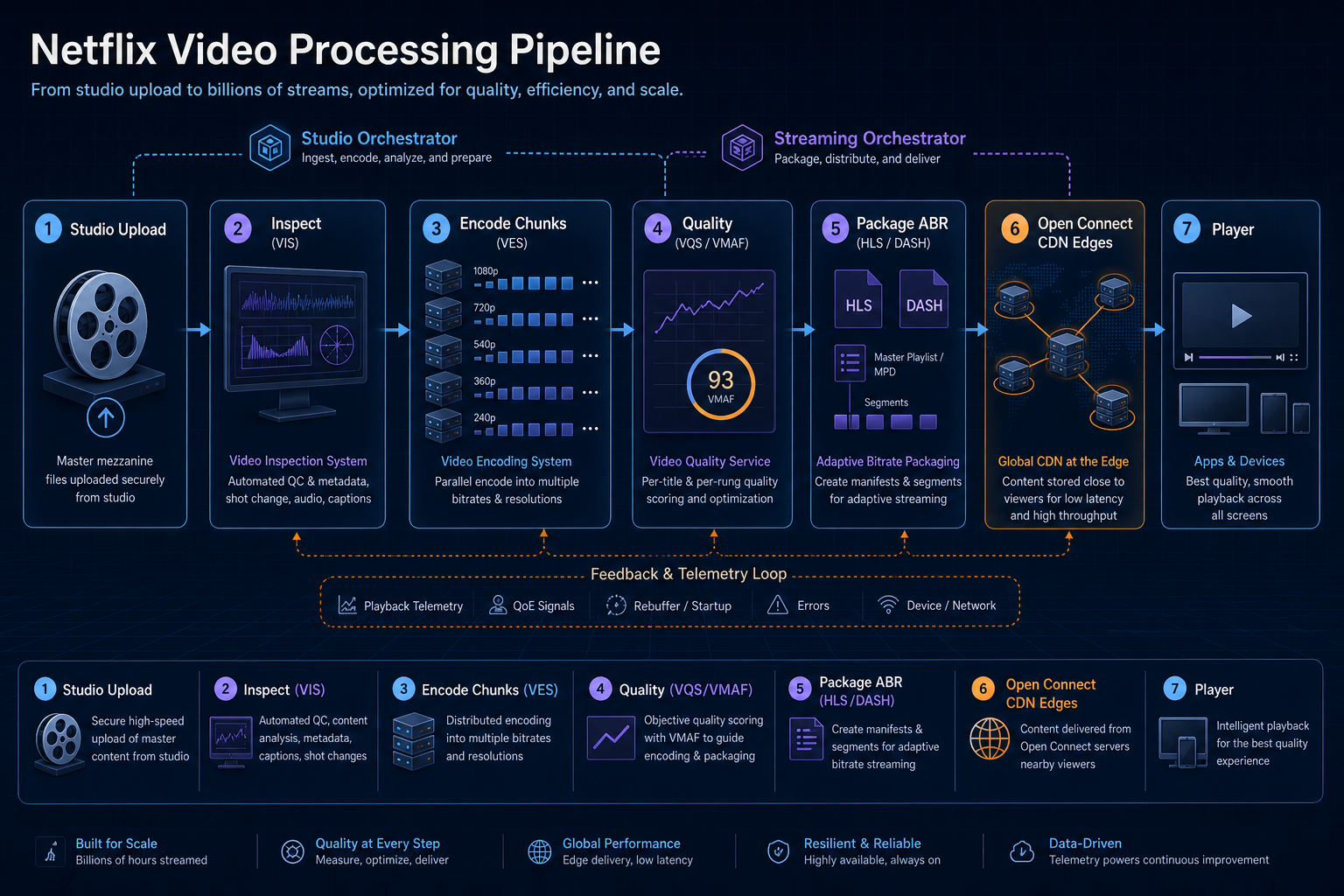
How Netflix turns a studio mezzanine into globally streamed ABR assets: Cosmos microservices, encoding, quality, packaging, and Open Connect delivery.