
Enterprise AI Workflow Patterns: Autonomy vs Control
Choose between single inference, fully autonomous agents, deterministic workflows, and guided hybrid agents. Comparison matrix, JSON contracts, and when to escalate from one call to a full agent.
Choose between single inference, fully autonomous agents, deterministic workflows, and guided hybrid agents. Comparison matrix, JSON contracts, and when to escalate from one call to a full agent.

Enterprise agent architecture: when a shared runtime with governed routes is enough, and when different execution boundaries require specialized agents.

User identity answers who is asking; agent identity answers which software is acting. Least privilege, audit, revoke, and dual gateway checks for real-time and batch.
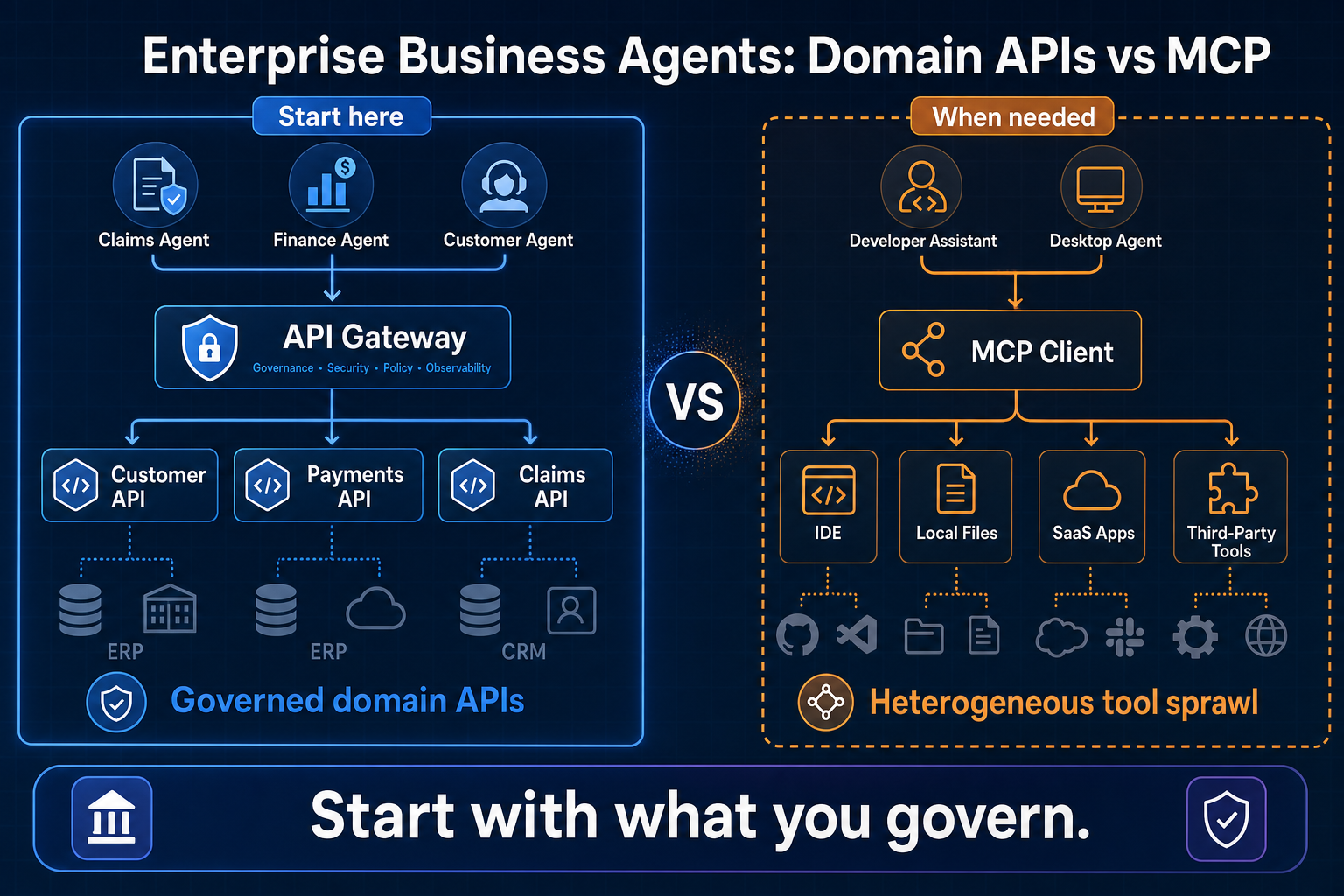
MCP is a valuable standard for AI tool interoperability. For regulated business agents, pin agent governance first (route contract, tools, permissions, context), then choose MCP only where it beats governed business APIs.
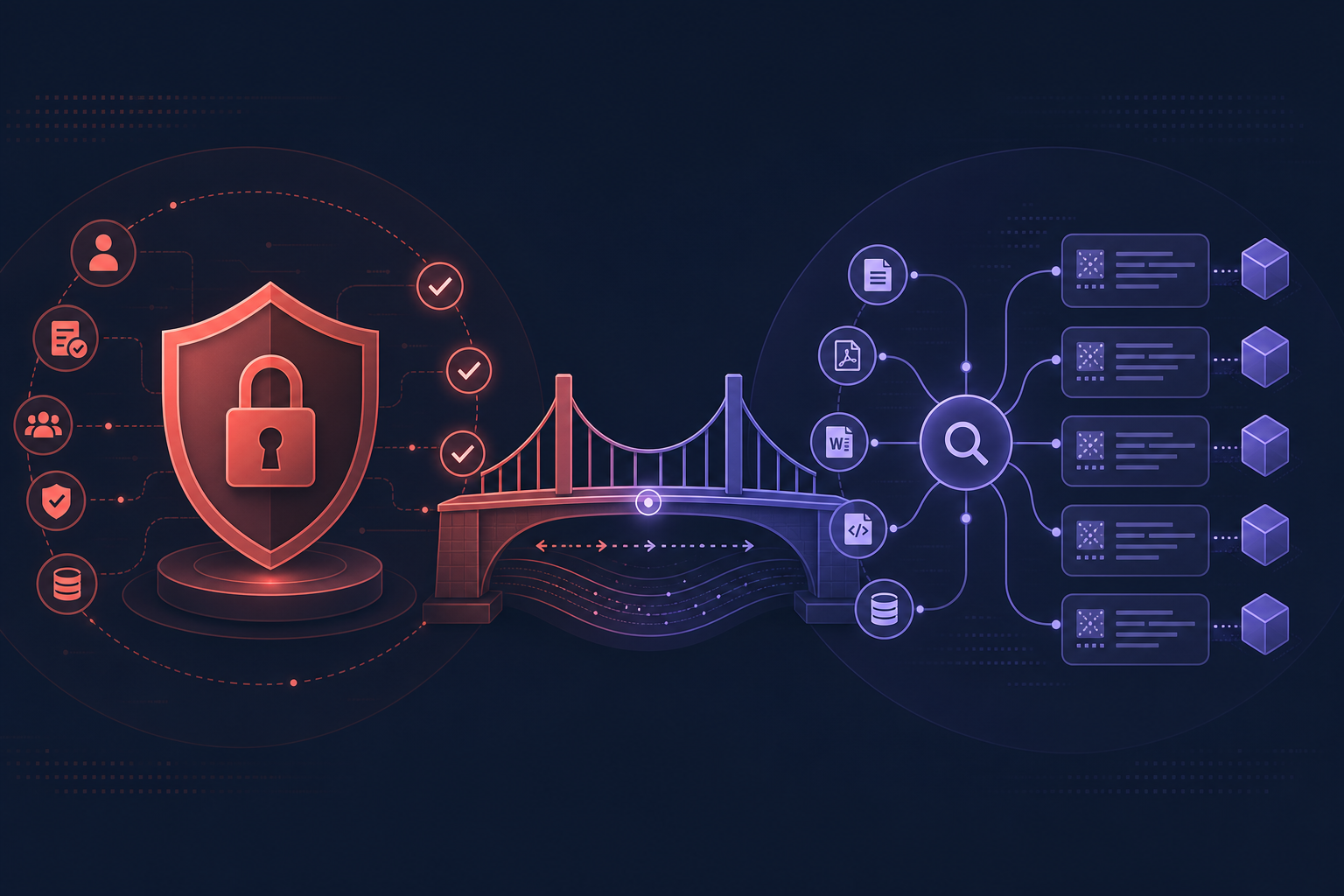
Retrieval is not a database query; it is a governed action. How Policy-Governed Agent Runtime applies to RAG when context construction must be scoped, auditable, and enforced before inference.
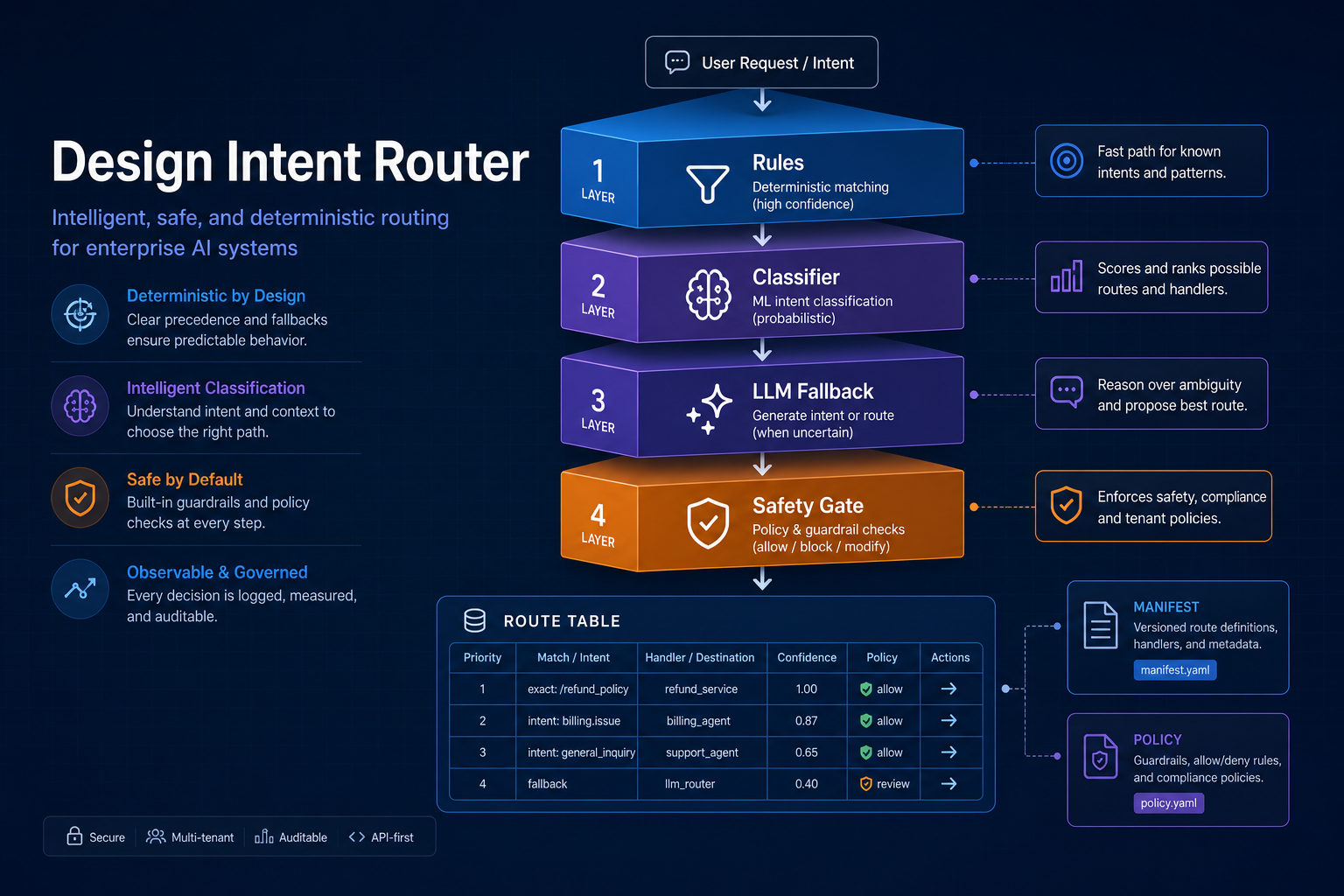
A practical design guide for intent routing — route tables, layered classification, confidence thresholds, session stickiness, eval gates, and wiring dispatch into the agentic app before the model loop runs.
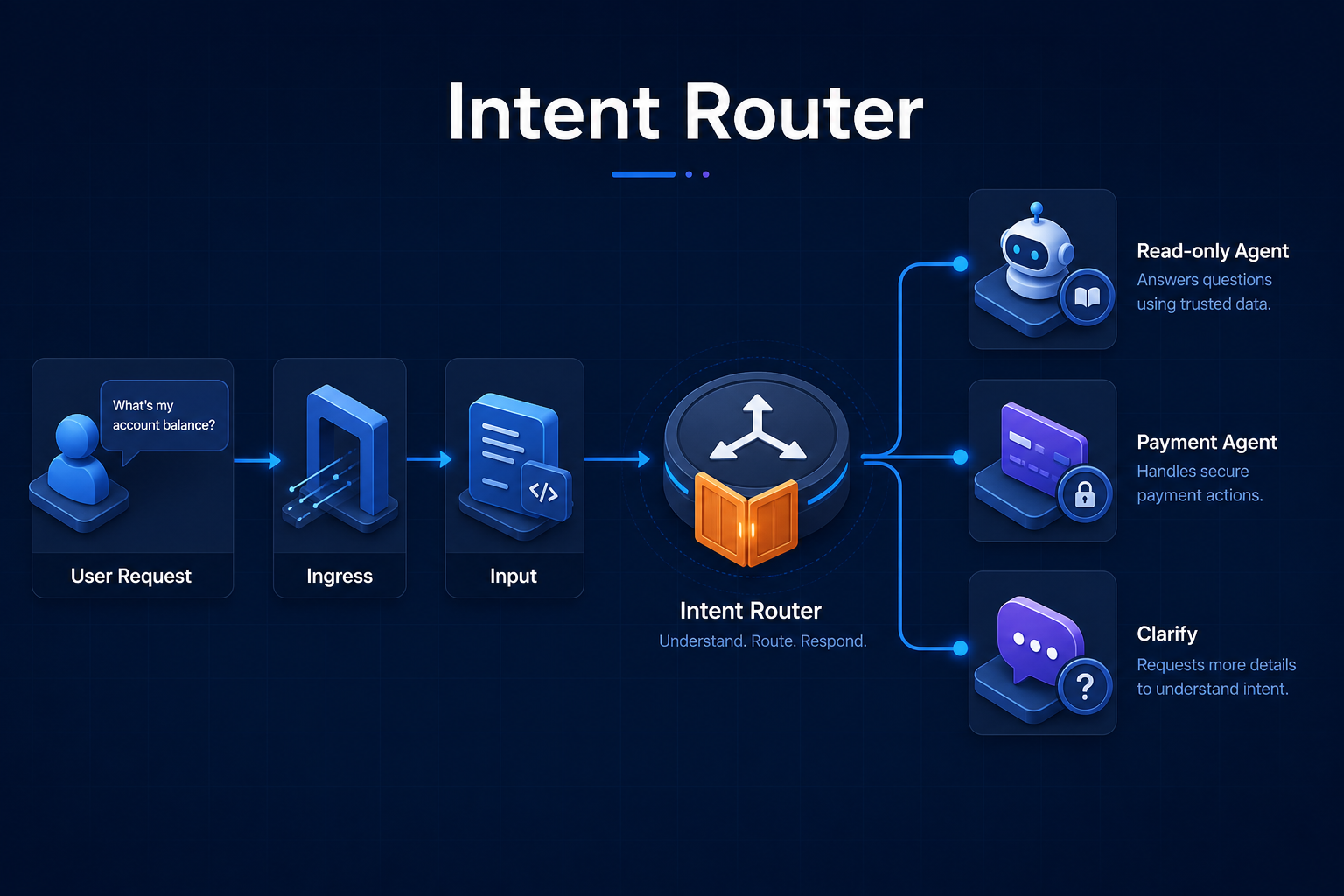
An intent router is the first deterministic decision in an agent stack. It maps user requests to the right workflow, agent, and tool manifest before the model loop runs — and when it fails, every downstream stage can execute perfectly and still miss the user’s goal.
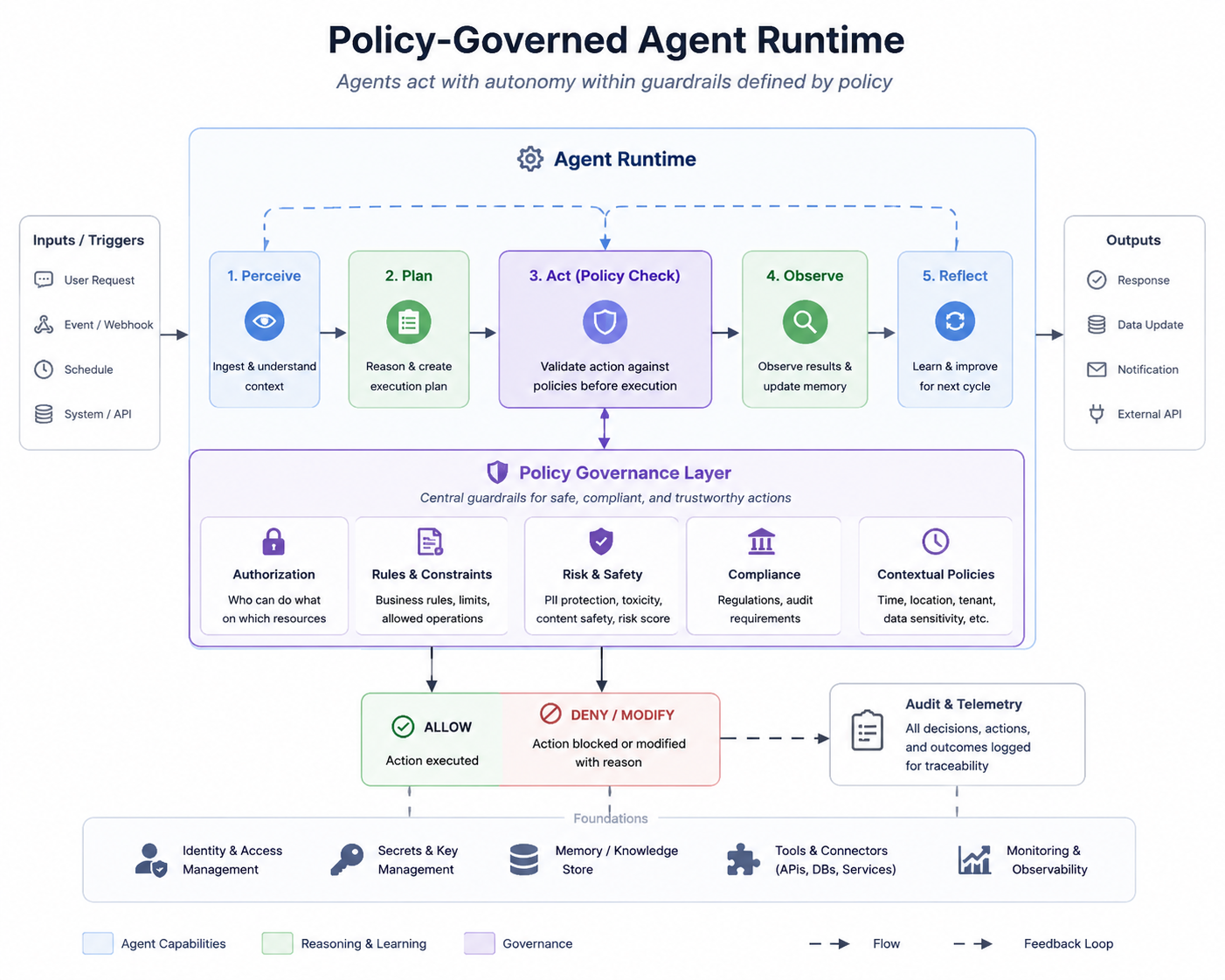
Proposal is not permission. Agents propose tool calls; governance decides whether they run. An architecture breakdown of runtime trust boundaries for production agent systems in regulated industries.