Hallucinations Is a System Design Problem, Not a Model Problem

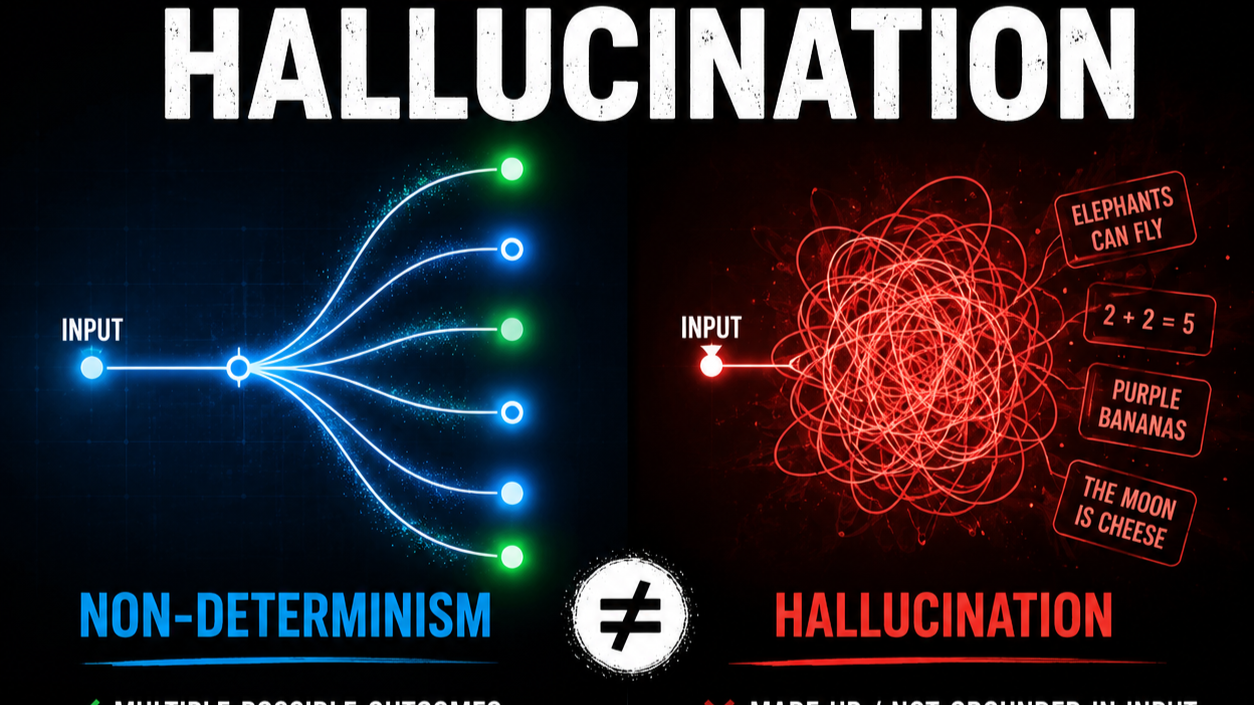
Every time a model invents a citation, the conversation jumps to "which model hallucinates less?". That's the wrong question. The model did exactly what it was built to do. Everyone's focused on picking the model that hallucinates least.
The thing that will actually decide whether your AI system is trustworthy is the architecture you wrap around the model – grounding, retrieval, validation, and an explicit path to "I don't know".
A hallucination isn't a bug the next checkpoint will patch. It's the expected behavior of a frozen, probabilistic next-token predictor asked a question it has no grounded answer for. Treating it as a model defect means you keep waiting for a fix that isn't coming. Treating it as a design problem means you can actually solve it today.
Hallucination is not the model failing. It's the model succeeding at the wrong objective – fluent continuation – in a system that never gave it the right one: grounded truth.